Communal area Cleaning in W10
If you manage or live in a shared building in West London, Communal area Cleaning in W10 is one of those services that quietly makes everyday life easier. Clean entrances, tidy stairwells, fresh-smelling hallways, and well-kept shared spaces all shape how a property feels the moment someone walks in. In an area like W10, where period conversions, mansion blocks, purpose-built flats, mixed-use premises, and smaller residential developments sit side by side, a reliable cleaning routine matters just as much as repairs, lighting, or bin collection.
Local communal cleaning is not just about appearance. It helps shared spaces stay safer, more pleasant, and more welcoming for residents, visitors, tenants, staff, and customers. Whether you oversee a block near Ladbroke Grove, a converted property closer to North Kensington, or a small commercial building that needs regular upkeep, having a professional team that understands the demands of the area can make a noticeable difference.
Many local customers look for a service that is consistent, respectful, and flexible. They want cleaners who can work around residents, handle access sensibly, and pay attention to high-touch areas that are easy to overlook. That is exactly why communal area maintenance should be tailored to the property, the people using it, and the practical conditions of W10 itself.
Why communal area cleaning matters in W10
Shared areas see far more foot traffic than private homes. Doors are opened and closed all day, handrails are touched constantly, and floors collect dirt from pavements, prams, shoes, shopping trolleys, and weather. In busy parts of W10, especially around residential streets with frequent comings and goings, dust and debris can build up quickly. Without regular attention, communal spaces can start to feel neglected even if individual flats or offices are well cared for.
A clean shared environment also helps protect property value and the overall impression of a building. For landlords, managing agents, resident associations, and building owners, consistent communal cleaning supports a more organised, professional image. For residents, it creates a calmer atmosphere and reduces the frustration that can come from dirty landings, overflowing bins, marked glass, or neglected entrances.
Communal area cleaning in W10 is especially valuable in buildings where people expect a mix of practicality and presentation. Many properties in the area have older features, narrow staircases, entry systems, and shared access points that need a careful approach. A local team understands that these spaces may require different methods from a standard office clean or a simple domestic visit.
What our communal area cleaning service covers
Every building is different, so the service should be shaped around your layout and priorities. A strong communal cleaning routine usually includes the areas that are touched most often and noticed first by residents or visitors.
Typical tasks can include:
- Lobby and entrance cleaning
- Stairwell and landing sweeping or vacuuming
- Mopping hard floors and spot-cleaning where needed
- Cleaning handrails, push plates, and door handles
- Wiping skirting boards and low-level surfaces
- Dusting communal fixtures, ledges, and accessible surfaces
- Cleaning internal glass, mirrors, and door panels
- Rubbish removal from shared bins or collection points
- Removing light litter from communal corners and entryways
- Freshening up shared touchpoints to improve hygiene
Some properties may also need additional attention for lifts, mail areas, resident noticeboards, basement entrances, bike storage, bin stores, and shared corridors. If you manage a building with a reception or concierge-style entrance, the cleaning plan can be adapted to suit the flow of people throughout the day.
Important note: the right service is not one-size-fits-all. A small converted house with two floors will need a very different routine from a larger block with multiple entrances, service corridors, and heavier footfall.
Local property types in W10 and how they affect cleaning
W10 includes a broad mix of property styles, and that variety affects how communal cleaning should be planned. In some streets you will find elegant period conversions with narrower staircases, original bannisters, and delicate finishes. In other places there are modern apartment buildings, shared access lobbies, or mixed residential and commercial units that need routine care to remain presentable.
Older buildings often collect dust in corners, along skirting, and around window frames. They may also have carpets on stairs, painted walls that show scuffs easily, or entrance floors that need careful treatment to avoid damage. Modern developments may have glass, polished surfaces, stainless-steel fittings, lift panels, and secure entry systems that all need regular wiping to stay looking their best.
W10 also has buildings where shared spaces are used by residents at different times of the day, as well as by delivery drivers, maintenance teams, cleaners, visitors, and service staff. That means communal area cleaning has to be efficient, discreet, and respectful. A team familiar with the area will understand the realities of timing, access, and working safely in occupied buildings.
How local access and parking can matter
Anyone familiar with W10 knows that parking can be tight, loading can be awkward, and not every building offers easy street access. These are practical details, but they matter. A local cleaning provider is more likely to plan around residential parking controls, narrow roads, shared entrances, and building-specific access arrangements. That helps the service run more smoothly and reduces disruption for residents and neighbours.
Who benefits from communal cleaning services
Communal cleaning supports a wide range of customers across W10. It is not only for large apartment blocks. Smaller buildings, shared houses, commercial premises, and mixed-use properties can all benefit from routine upkeep.
Typical customers include:
- Residents’ management companies
- Landlords with shared staircases or entrances
- Letting agents managing multiple flats
- Freeholders responsible for communal parts
- Housing associations and estate managers
- Small business owners with shared premises
- Office managers needing tidy reception and circulation areas
- Mixed-use building operators with resident and customer access
For residents, the value is immediate: cleaner stairs, fewer unpleasant odours, less litter, and a better overall living environment. For landlords and managing agents, it helps reduce complaints, support inspections, and maintain standards without having to chase constant ad hoc cleaning.
Strong property presentation matters when a building is being viewed, let, sold, or regularly visited by contractors. Shared spaces are often the first part of a property that people see, so keeping them in good order helps create a better impression from the start.
What a professional cleaning visit typically looks like
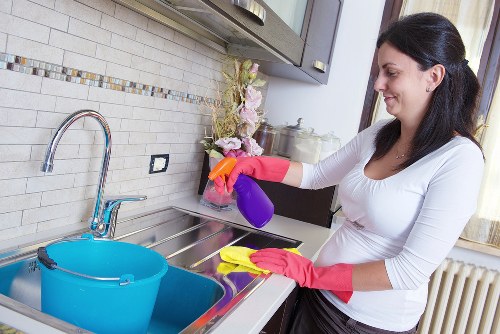
A proper communal cleaning service should feel organised and predictable. Most customers want to know what happens on each visit and how the work is carried out. While every contract is different, a typical visit follows a sensible routine that focuses on the common problem areas first.
Cleaning often begins with a check of entrances, stairwells, and shared circulation routes. After that, the team may vacuum carpets, sweep hard floors, mop where appropriate, remove visible litter, and wipe down surfaces touched regularly by residents. High-contact points such as handrails, buttons, door handles, and intercom surrounds usually need particular attention.
Depending on the property, the cleaner may also spot issues that deserve further maintenance, such as recurring staining, blocked corners, overflowing bin areas, damaged fixtures, or signs of moisture. While a cleaner is not there to carry out repairs, noticing these problems early can help managing agents and residents address them before they become bigger issues.
Typical focus areas during a visit
- Front entrance and internal lobby
- Staircases, landings, and corridors
- Lifts and lift lobbies
- Shared flooring and matting
- Glass panels and internal doors
- Bin areas and surrounding access routes
- Basement or rear access points
Good communal cleaning is consistent, careful, and adapted to the building rather than rushed or overly generic.
How to choose the right communal area cleaning provider
Choosing a provider for communal area cleaning in W10 is about more than finding someone who can sweep and mop. You want a company that can reliably work in shared environments, communicate clearly, and respect the different needs of residents and property managers.
Here are some practical points to consider:
- Experience with shared spaces – Communal cleaning is different from domestic cleaning and requires a routine suited to repeated traffic and multiple users.
- Local knowledge – A team familiar with W10 is better placed to understand access issues, parking realities, and the pace of local residential life.
- Flexible scheduling – Some buildings need morning visits before residents leave, while others benefit from quieter off-peak timing.
- Attention to detail – Shared areas should be cleaned thoroughly, not just visibly tidied.
- Clear service scope – You should know what is included, how often visits happen, and what can be added if needed.
- Respect for residents – Cleaners should work neatly, be considerate, and avoid unnecessary disruption.
Many customers prefer a provider that can offer a simple, practical plan rather than an overcomplicated package. The best arrangement is usually the one that matches the building’s actual needs and can be maintained over time.
Benefits of hiring a local W10 team
There are real advantages to working with a local team for Communal area Cleaning in W10. Local cleaners are often better placed to respond to the practical realities of the neighbourhood and to build a dependable routine around your property’s schedule.
Key benefits include:
- Faster understanding of local access arrangements
- More practical scheduling around resident movement
- Familiarity with typical building layouts in the area
- Easier coordination with nearby property managers and agents
- Better awareness of street-level dirt, weather debris, and busy footfall patterns
- More responsive service when routines need adjusting
Local service also tends to feel more personal. Instead of a generic approach, you get cleaning planned around what your building actually needs. That matters in W10, where one block may have shared front steps and a small hallway, while another has multiple floors, internal common parts, and a higher volume of residents and visitors.
In short: a local provider is often better equipped to deliver a practical, steady, and stress-free service.
What affects pricing for communal cleaning?
Customers often want an upfront idea of cost, and it is sensible to ask for a quote. Exact pricing depends on a number of building-specific factors, because no two communal spaces are the same.
Common pricing factors include:
- Size of the building and number of floors
- How often the service is needed
- Types of surfaces to be cleaned
- Amount of foot traffic and dirt build-up
- Number of entrances, lobbies, and corridors
- Whether lifts, bin areas, or external access points are included
- Special requirements such as carpet care or periodic deep cleaning
- Access constraints, timing needs, or key-holding arrangements
For many customers, the most helpful next step is to request a tailored quote based on the building layout and cleaning frequency required. That gives a much clearer picture than a generic estimate, especially if your property has unusual access, shared commercial parts, or specific maintenance expectations.
If you are comparing providers, ask exactly what is included in the scheduled visit and whether the service can be adapted over time.
How often should communal areas be cleaned?
The right frequency depends on usage. A building with a lot of residents, visitors, and deliveries may need more regular visits than a small block with limited shared traffic. In W10, where many properties have active front entrances and regular movement throughout the day, weekly cleaning may be the minimum for some spaces, while others benefit from multiple visits each week.
As a general rule, consider the following:
- High-traffic blocks may need several visits weekly
- Medium-traffic buildings often work well with weekly cleaning
- Smaller converted properties may need less frequent but still regular attention
- Commercial or mixed-use premises may need a schedule shaped around opening times and shared circulation
The best schedule is the one that keeps the building consistently clean without creating unnecessary cost or disruption. If certain parts of the property get dirty faster than others, the cleaning plan can be adjusted to focus on those trouble spots.
Signs your building may need more frequent cleaning
Look out for dull floors, visible dust on ledges, fingerprints around doors, lingering odours in bin areas, and complaints about the general condition of shared spaces. These are often signs that the current routine is not quite enough.
Preparation checklist for residents and property managers
Good communication helps any cleaning service run smoothly. Before a scheduled visit, a simple preparation checklist can make access easier and ensure cleaners can work efficiently.
For residents and occupiers:
- Keep personal items out of communal walkways
- Leave shared entrances and corridors accessible
- Report any blocked access or damaged fixtures in advance
- Avoid leaving rubbish in non-designated areas
- Make sure entry arrangements are clear if needed
For managing agents, landlords, or building supervisors:
- Confirm which areas are included in the service
- Share any access instructions or timing restrictions
- Highlight sensitive surfaces or problem areas
- Note any recurring issues such as litter, stains, or bin overflow
- Review the cleaning frequency from time to time as occupancy changes
These small steps help the service run more efficiently and make it easier to maintain a consistent standard across the building.
Areas covered in and around W10
Communal cleaning requests in W10 often come from a wide local area, including nearby residential streets and mixed-use neighbourhoods that share the same access and maintenance challenges. Customers commonly look for support in and around North Kensington, Ladbroke Grove, Westbourne Park, Kensal areas close to the W10 boundary, and surrounding parts of West London where shared buildings need regular upkeep.
Because the area includes both busy roads and quieter residential pockets, the practical cleaning needs can vary from one street to the next. A building closer to main transport routes may see more dust and pavement debris, while a quieter side street may still need routine care for stairs, entries, and bins. This is why a local understanding of the area is so useful.
Whether your property is residential, commercial, or mixed-use, a well-planned cleaning routine can be adapted to your building’s location and traffic patterns.
Why choose us for communal area cleaning in W10
When customers contact a local team, they are usually looking for dependable service, careful workmanship, and straightforward communication. They want shared spaces cleaned properly, without fuss, and in a way that fits the building.
Reasons local customers value this service include:
- Cleaner entrances and more welcoming shared areas
- Better control of dirt, dust, and everyday litter
- Improved hygiene on touchpoints used by many people
- More consistent presentation for residents and visitors
- Less strain on landlords and managing agents
- A practical routine that supports long-term upkeep
It also helps to work with a provider that understands the balance between thorough cleaning and quiet professionalism. Shared residential buildings are occupied spaces, so the service should be unobtrusive, punctual, and respectful of people’s routines.
Request a free quote if you would like a service plan shaped around your building, your access setup, and your preferred frequency.
Frequently asked questions
Do you clean both residential and commercial communal areas?
Yes. Communal cleaning can be arranged for residential blocks, mixed-use buildings, offices with shared circulation spaces, and other properties with common areas that need regular care.
Can the cleaning be scheduled around residents and businesses?
Absolutely. Timing can usually be planned to reduce disruption, whether the building is busiest in the morning, afternoon, or across extended business hours.
What if my building has stairs, lifts, and several entrances?
The service can be adapted to multi-access properties. Stairwells, lift lobbies, corridors, and additional entrance points can all be included as needed.
How do I know how often the communal areas should be cleaned?
That depends on footfall, the number of occupants, and how quickly the space becomes dirty. A tailored quote and site discussion can help identify the right frequency.
Can you help with bin areas and litter in shared spaces?
Yes, many communal cleaning arrangements include bin stores, collection points, and litter removal from shared circulation areas where appropriate.
What if the building has older features or delicate finishes?
Cleaning methods can be adjusted for period properties, painted woodwork, carpets, glass, polished surfaces, and other materials that need a more careful approach.
How do I get started?
Simply contact us today or book your service now to request a tailored quote and discuss the cleaning schedule that best suits your property.
Final thoughts for W10 property owners and managers
Shared spaces say a lot about a building. In W10, where residential and commercial properties often sit within busy, well-used neighbourhoods, keeping communal areas clean is one of the most practical ways to improve comfort and presentation. It supports residents, reassures visitors, and helps protect the standard of the property over time.
Whether you need ongoing upkeep for a block of flats, a cleaner entrance for a mixed-use building, or regular attention for stairwells and corridors, a local service can make the process much easier. The right team will understand the building, work around the realities of the area, and provide a routine that feels dependable from week to week.
If you are looking for Communal area Cleaning in W10, now is a good time to arrange a quote and put a proper cleaning plan in place. Contact us today to discuss your property, your priorities, and the level of service that will keep your shared spaces looking their best.